By R. Clayton Brough
Historical presentation dated August 3, 2003, published on Blogger in 2015. The slides’ drought assessments, research summaries, and questions about future decades reflect the 2003 presentation. Scientific review is pending.
Original presentation
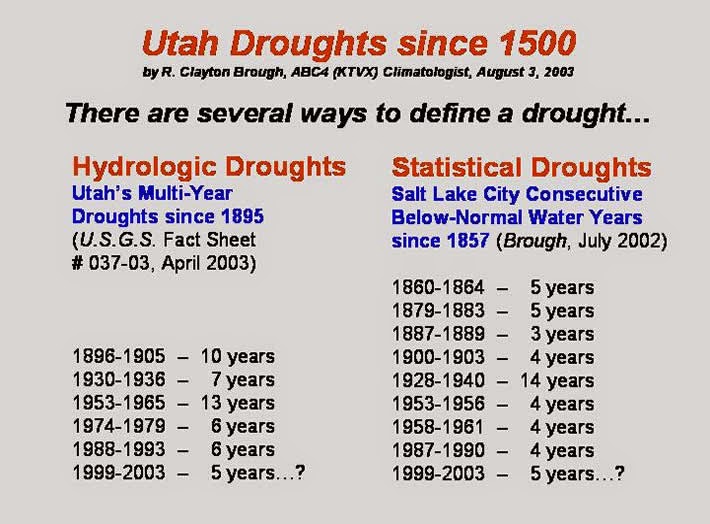
Slide 1: Ways to define drought: hydrologic and statistical records
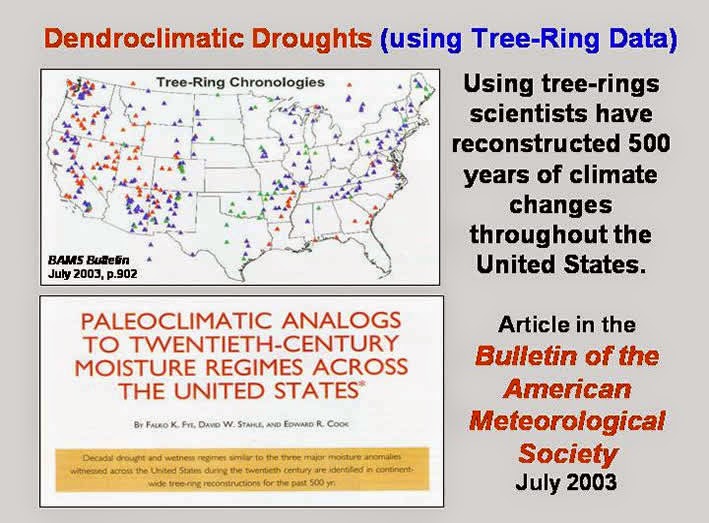
Slide 2: Tree-ring reconstructions of drought
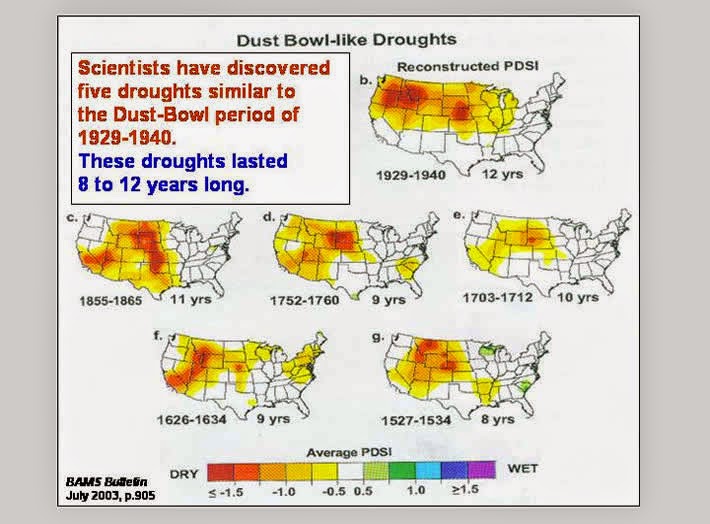
Slide 3: Dust Bowl-like droughts in the reconstructed record
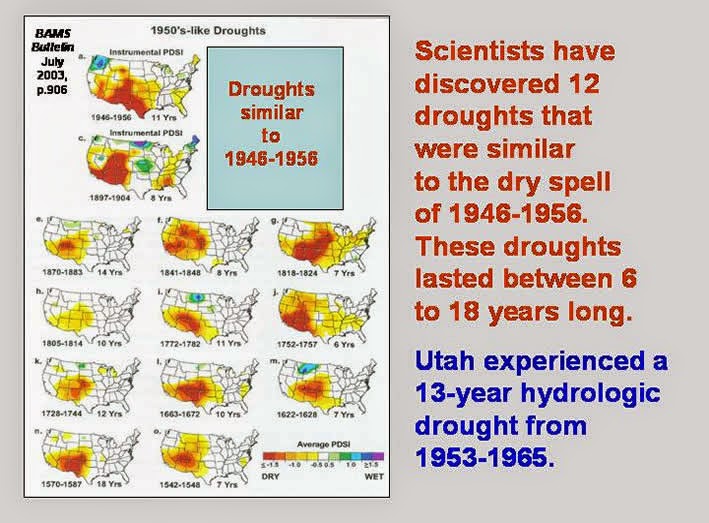
Slide 4: Droughts compared with the 1946–1956 dry period
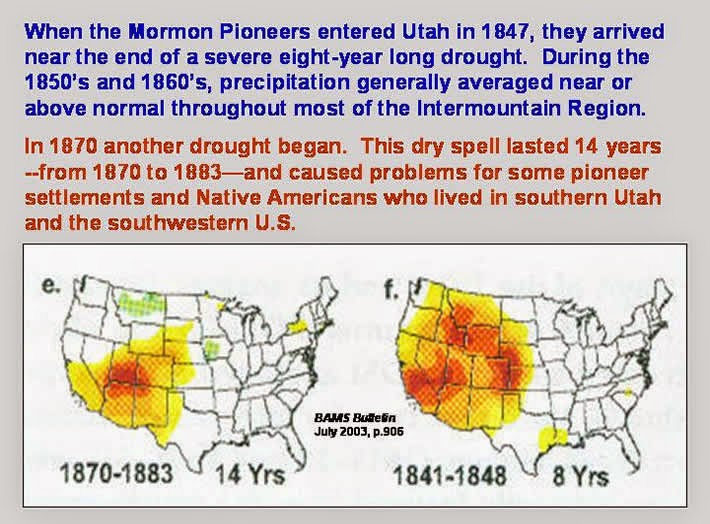
Slide 5: Nineteenth-century droughts and Utah settlement
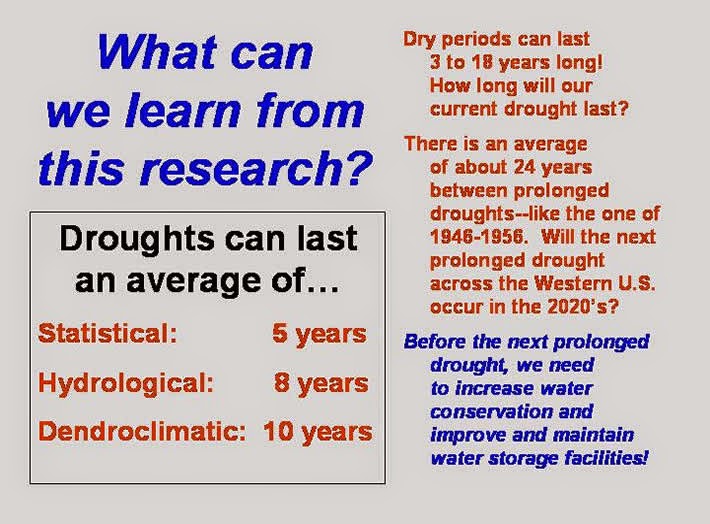
Slide 6: Conclusions and future questions posed in 2003
Reading the slides
This text companion describes the original slides; it does not update their scientific conclusions.
- Definitions and observed droughts. The opening slide distinguishes hydrologic droughts from consecutive below-normal water years at Salt Lake City. Its two lists cover different measures and periods; their durations should not be treated as interchangeable. The 1999–2003 entries were still open-ended when the presentation was made.
- Tree-ring evidence. The presentation cites the July 2003 Bulletin of the American Meteorological Society article “Paleoclimatic Analogs to Twentieth-Century Moisture Regimes Across the United States” by Fye, Stahle, and Cook. The maps illustrate reconstructions from tree-ring chronologies.
- Dust Bowl comparisons. The maps compare 1929–1940 with reconstructed dry periods in 1855–1865, 1752–1760, 1703–1712, 1626–1634, and 1527–1534. Their shading represents reconstructed Palmer Drought Severity Index values.
- Mid-century comparisons. The next slide compares other reconstructed dry periods with 1946–1956. It describes a 1953–1965 hydrologic drought in Utah and lists longer reconstructed droughts in the broader study area.
- Nineteenth-century Utah. The presentation discusses the 1841–1848 and 1870–1883 dry periods and their context for early Utah settlement and Native Americans in the region.
- Conclusions posed in 2003. The closing slide reports different average durations for statistical, hydrologic, and dendroclimatic droughts and asks about drought in future decades, including the 2020s. These are historical questions and conclusions, not a present forecast.